Pest control services Rock Springs homeowners and commercial facilities rely on provide systematic perimeter shielding, targeted interior chemical-free barriers, and rodent exclusion across Sweetwater County. Structural pest defense in high-desert elevations demands durable sealing that withstands sub-zero freezes and persistent wind.
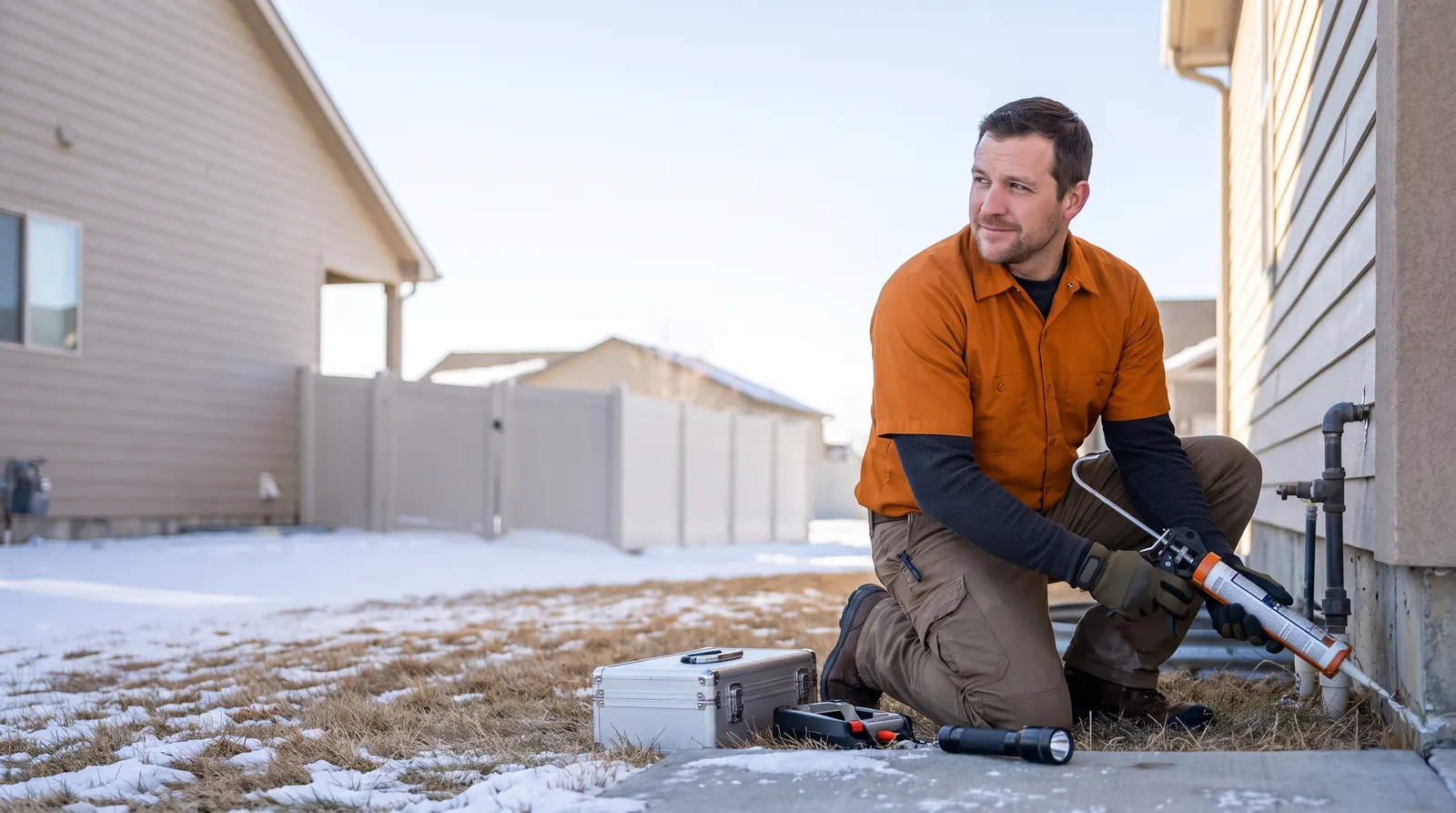
Pest control services company in Rock Springs is a specialized structural defense and eradication operation that eliminates high-desert crawling insects, wood-destroying pests, and rodents from residential and commercial structures.
Every service reflects the same meticulous attention to detail, whether it's a single job or a larger pest control services project across Rock Springs.
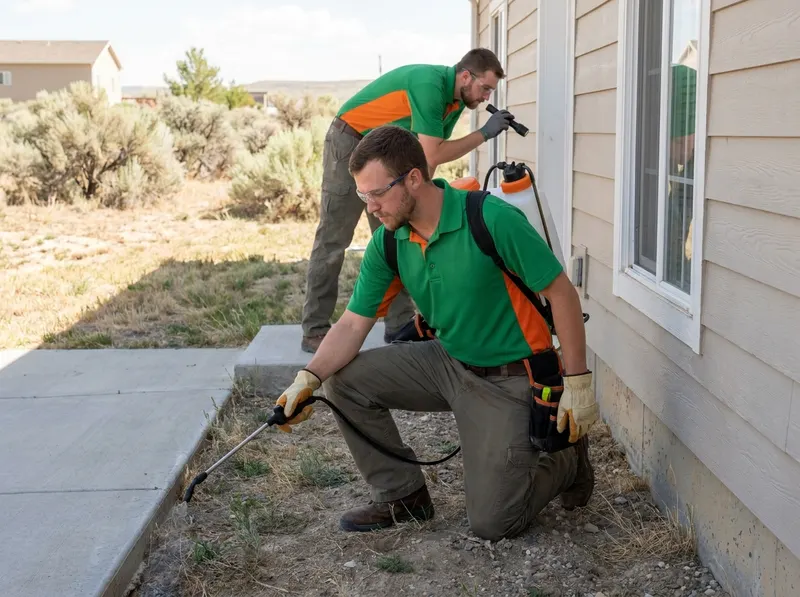
Complete interior and exterior perimeter fortification designed specifically for single-family homes, townhouses, and manufactured dwellings across Sweetwater County. Initial appointments diagnose foundation gaps, attic penetrations, and crawlspace moisture points. Applications establish a continuous repellent barrier around exterior stem walls while deploying zero-drift, targeted baits within mechanical utility chases to eradicate invading pests without airborne aerosol exposure in living spaces. Technicians apply a three-foot vertical band of micro-encapsulated suspension up exterior foundations and a six-foot band along adjacent soil lines, locking down access points against hobo spiders, wolf spiders, centipedes, and field crickets. Interior service centers on non-toxic physical barriers, crack-and-crevice gel baits placed deep within cabinetry hinges, and tamper-resistant monitoring trays placed behind laundry and utility appliances. This dual-zone defense maintains structural integrity without forcing families to evacuate heated interior spaces during cold high-desert winter months.
Get a quote →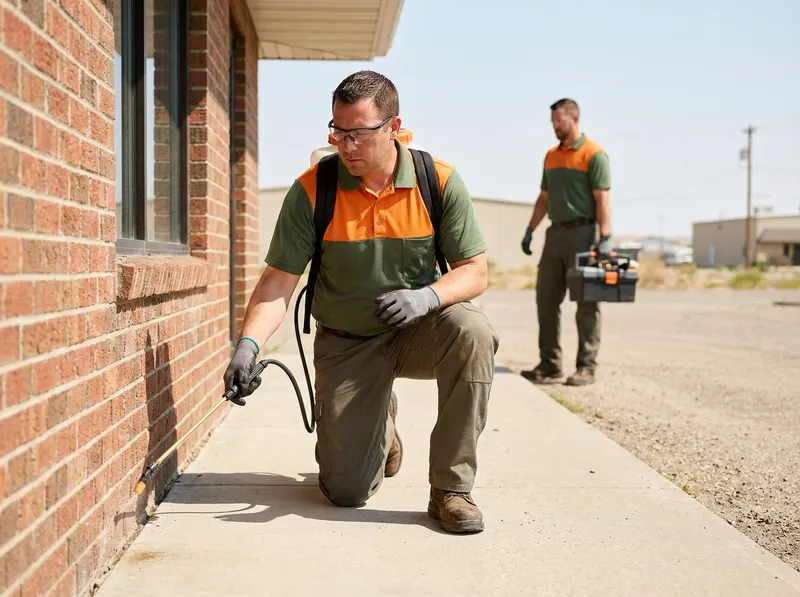
Regulatory-compliant pest management programs structured for logistics hubs, food processing units, retail storefronts, and industrial shops along major regional corridors. Service includes scheduled digital trend logs, multi-point tamper-resistant exterior bait arrays, non-chemical insect monitors, and rapid documentation meeting state health and municipal sanitation codes. Inspections identify operational risk zones such as overhead dock doors, dumpster pads, and pallet staging bays. Commercial agreements establish strict inspection intervals with barcoded checkpoint scanning, electronic capture logs for third-party auditing, and rapid dispatch response within twenty-four hours for sensitive processing facilities. Dedicated protocols address flying insect control via balanced UV-light traps, structural air curtains, and elastomeric weatherstripping across industrial overhead rollup doors, eliminating cold air drafts that simultaneously draw insects and rodents toward heated interior inventory zones.
Get a quote →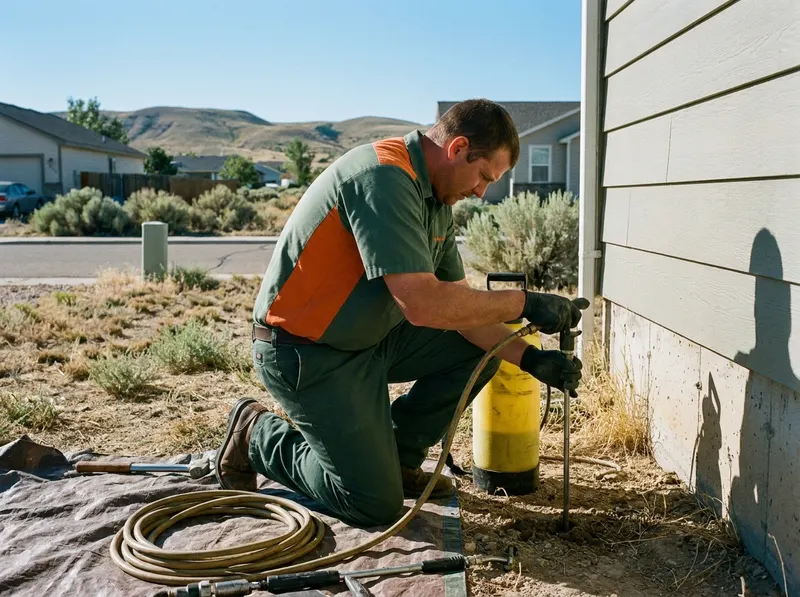
Comprehensive subterranean termite elimination utilizing targeted non-repellent soil barriers and localized sub-slab direct injections around structural footing footers. Technicians assess high-risk soil-to-wood contact points, subgrade crawlspaces, and basement framing timbers for mud tracking tubes and active cellulose damage. Treatment establishes an uninterrupted subterranean zone that eradicates colonies before primary joists and sill plates sustain load-bearing failure. Field protocols utilize liquid termiticides containing modern transfer active ingredients applied at a regulated rate of four gallons per ten linear feet in excavated trenches along foundation walls. For structures built over slab-on-grade foundations, specialized rotary percussion drills bore half-inch holes through masonry slabs at twelve-inch intervals, enabling calibrated chemical distribution directly into aggregate fill layers where foraging termites access plumbing penetrations and expansion joints.
Get a quote →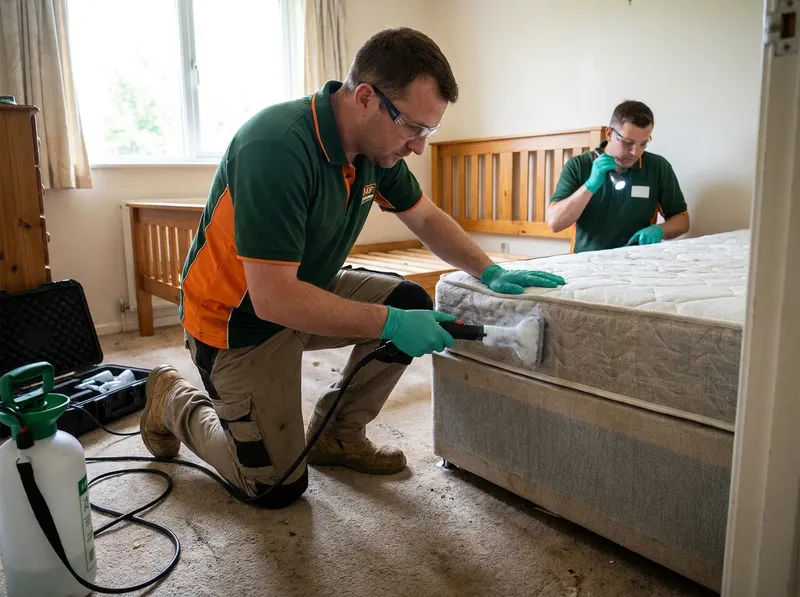
Rigorous multi-stage bed bug remediation utilizing targeted thermal convective air treatments combined with localized non-pyrethroid residual dust applications inside electrical receptacles, baseboard voids, and bed assemblies. The process forces lethal temperatures through mattress seams, hollow headboards, and subflooring layers to neutralize all stages of bed bug development from eggs to feeding adults in a single comprehensive intervention. Industrial electric heating units and high-velocity circulation fans raise and maintain ambient structure temperatures between 120 and 135 degrees Fahrenheit for a minimum of four continuous hours, penetrating thick textiles and wall voids that resist surface sprays. Technicians monitor heat distribution through wireless thermal sensors positioned within deep furniture cushions and interior wall cavities. Post-thermal treatments apply micronized amorphous silica dust inside electrical junction boxes and perimeter baseboard expansion gaps to maintain an active barrier against potential reintroduction from shared walls or travel luggage.
Get a quote →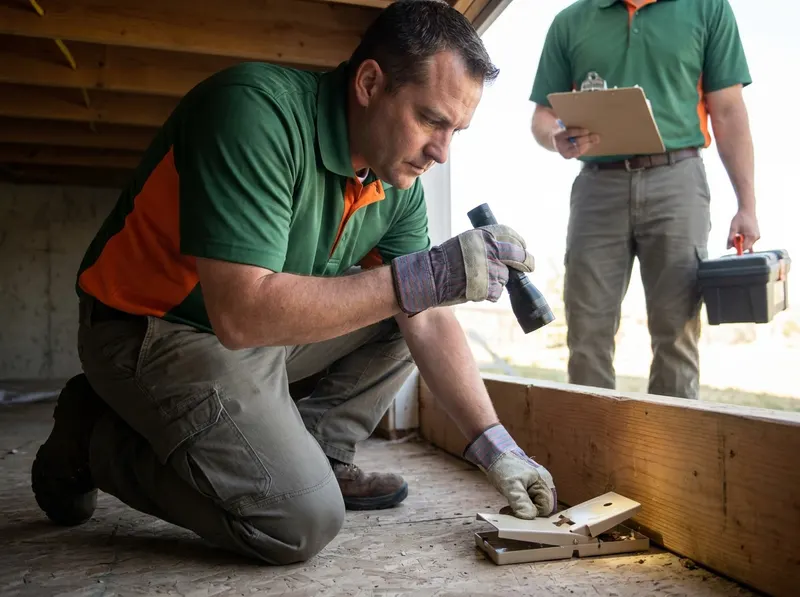
Lethal trapping programs, mechanical baiting networks, and heavy-gauge hardware-cloth exclusion designed to eliminate deer mice, house mice, and Norway rats. High-desert cold forces outdoor rodents inside heating chases, insulated crawlspaces, and dropped ceilings. Field services locate entry points down to one-quarter inch, install galvanized rodent-proof barriers, and remove biological harborages to prevent hantavirus propagation and wiring destruction. Exclusion specialists seal exterior foundation gaps, utility service conduit entries, and corner trims using quarter-inch twenty-gauge welded wire hardware cloth bonded with expanding closed-cell polyurethane foam impregnated with copper screening. Inside crawlspaces, technicians install snap traps in locked stations along primary structural joists and replace contaminated fiberglass batt insulation with clean insulation materials after sanitizing surfaces with hospital-grade broad-spectrum biocides.
Get a quote →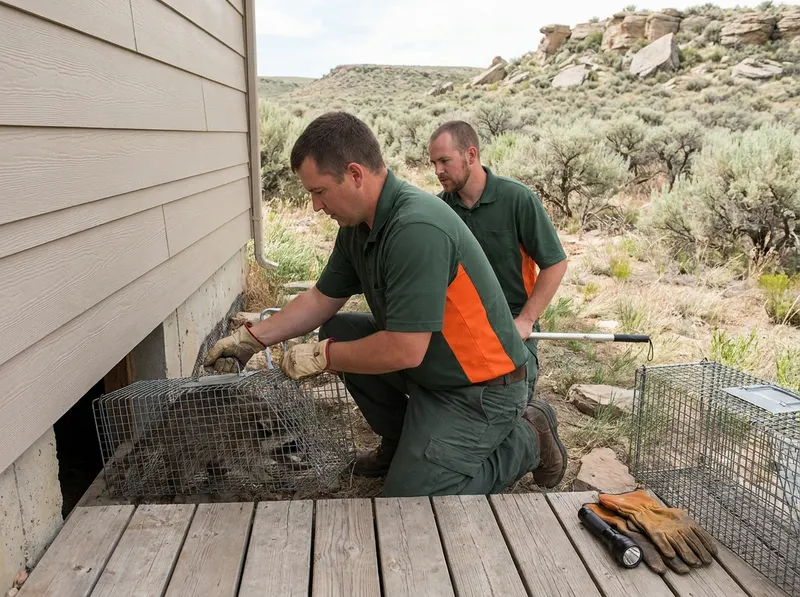
Targeted trapping, physical removal, and structural exclusion of non-domestic nuisance animals such as raccoons, skunks, bats, and ground squirrels seeking shelter beneath porches, outbuildings, and roof soffits. Technicians employ heavy-gauge steel one-way release funnels, durable roof vent wire guards, and foundation screening. Services include humane relocation in accordance with Wyoming Game and Fish Department parameters, followed by odor neutralization and fecal sanitization. Field operators inspect fascia boards, chimney crowns, and crawlspace entry hatches, fabricating custom galvanized steel covers to prevent secondary invasions. Decontamination procedures eliminate biological nesting debris, hair, and parasitic vectors such as bat bugs and fleas using industrial HEPA vacuums and specialized enzymatic deodorizers designed to break down persistent skunk musks and territorial scent markings that attract roaming carnivores from surrounding rangeland.
Get a quote →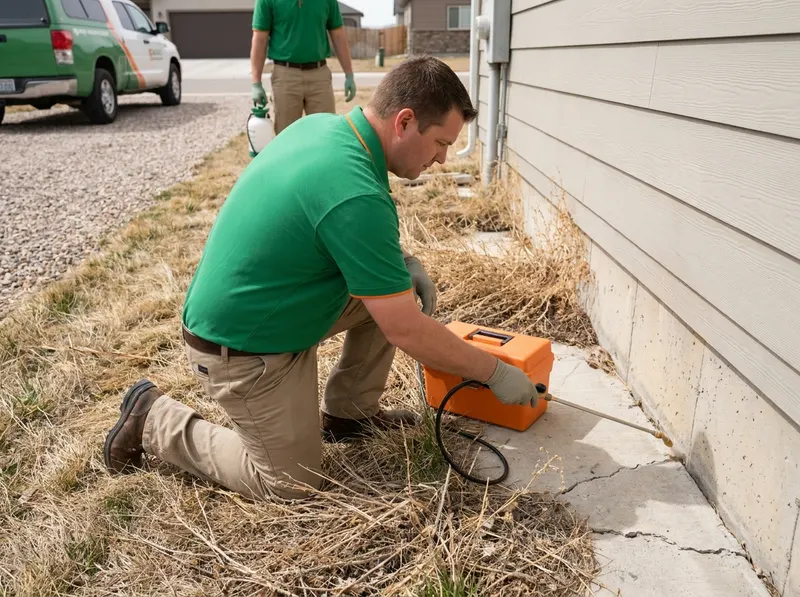
Systematic colony eradication targeting moisture-seeking carpenter ants, field ants, and pavement ants nesting in structural timbers, landscaping rocks, or foundation edges. Field protocols eliminate trails through non-repellent transfer baits that worker ants carry directly into underground subterranean queens. Exterior perimeter shielding stops spring satellite nesting along slab joints, driveways, and concrete masonry foundations. Technicians conduct detailed structural soundings on exterior sill plates, window headers, and deck attachments to pinpoint internal galleries excavated by carpenter ants. Infested structural timbers receive direct micro-injection treatments using localized botanical foaming agents, neutralizing satellite colonies without requiring massive structural demolition. Exterior landscaping borders and paver expansion lines receive targeted granular micro-baits that disrupt reproductive cycles within the primary subterranean nests before foraging trails penetrate interior kitchens and bathrooms.
Get a quote →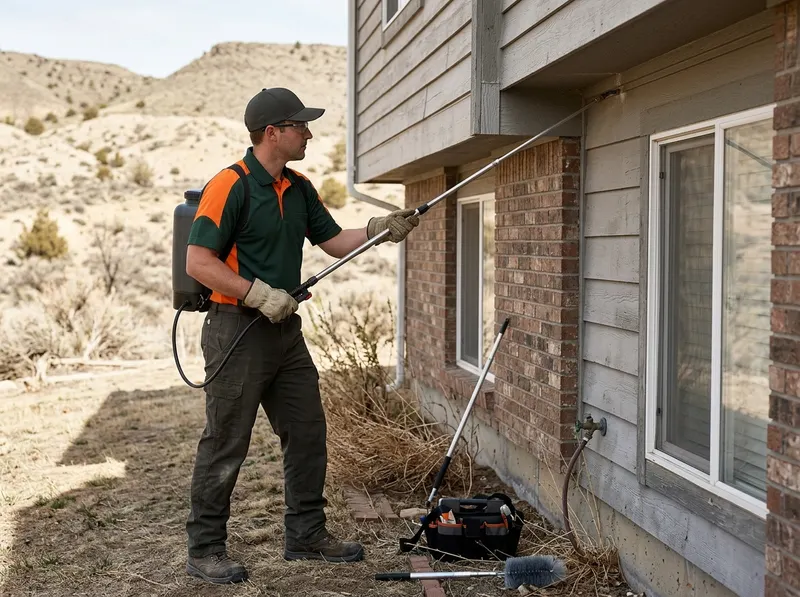
Dedicated arachnid mitigation programs targeting venomous black widows, aggressive hobo spiders, and pervasive wolf spiders inhabiting basements, subterranean window wells, and exterior siding seams. Structural treatments combine mechanical web removal with targeted pyrethroid micro-emulsion barriers applied around windows, eaves, foundation steps, and outdoor lighting fixtures where insect prey congregates. Technicians manually clear exterior perimeter eaves using telescoping electrostatic duster poles, applying micro-pulverized repellent dusts into high-risk structural crevices, detached garages, and storage sheds. Interior treatment emphasizes non-toxic sticky monitoring stations situated along baseboards and behind storage boxes, paired with weatherstripping reinforcement on exterior entry doors and subterranean window wells to block natural arachnid migration corridors during rapid autumn temperature drops.
Get a quote →You get a firm, itemized quote for your pest control services before any work begins, no surprises, no pressure.
Careful prep, tidy work, and a full cleanup when we are done. We treat your home and belongings like our own.
The same trusted, background-checked team from the first call to the final check.
If you require rapid elimination of an active indoor nesting population such as bed bugs or German cockroaches, choose targeted thermal or micro-injection cleanouts; if you are protecting against seasonal field invasions from sagebrush borders, choose quarterly high-desert perimeter barriers with exterior rodent stations. The trade-off is upfront interior preparation labor versus ongoing preventative maintenance costs. For structures exhibiting foundation cracks along sandstone shelves, pair mechanical exclusion with perimeter barrier shielding; relying solely on perimeter sprays without sealing access points allows rodents to bypass chemical lines during winter freezes.
For commercial food operations near transportation routes, select monthly regulatory monitoring and digital trap networks; residential suburban lots generally require semi-annual or seasonal boundary reinforcement. If your structure rests over an unencapsulated earthen crawlspace prone to soil moisture, choose heavy-gauge sub-floor barrier liners and zinc-plated mesh screening; if your property features a finished concrete slab with radiant floor heating, prioritize non-repellent sub-slab injections and exterior weep-hole baffling to prevent chemical migration into living quarters. When evaluating pest control services near me, consider that a single annual spray fits low-pressure suburban homes with intact siding, whereas multi-season defense contracts fit properties adjacent to open sagebrush rangeland where rodent pressure peaks continuously from September through March.
Every project gets a firm, written price after a free on-site visit. Ranges below for orientation.
Tell us about your pest control services job and we'll send a clear, written quote, usually the same day. Or just call and talk to a real Rock Springs pro.
(307) 448-1127
Structures in Rock Springs face extreme alkaline soil composition, severe 6,380-foot elevation freeze-thaw cycles, and relentless wind patterns off the surrounding sagebrush hills. In neighborhoods bordering the White Mountain formations, the Sweetwater County Events Complex, and Western Wyoming Community College, rapid drops into sub-zero temperatures force deer mice and field spiders into residential foundation vents and crawlspaces. Standard water-based chemical applications wash out or freeze during October-to-April cold snaps, requiring micro-encapsulated formulations bonded directly to stone, concrete, and timber framing. Homes situated near Pilot Butte Wild Horse Scenic Loop and along the Yellowstone Road Corridor experience elevated pressure from burrowing rodents that seek warmth along insulated foundation walls and subgrade utility lines. Properties in the Bunning Park Area and historic Downtown Rock Springs feature older brick and stone foundations built directly over packed dirt basements, requiring specialized crack-and-crevice injections and mechanical hardware-cloth shielding rather than generic perimeter spraying. Furthermore, alkaline clay soils along the Reliance Road Area expand and contract dramatically between seasonal freezes, generating structural foundation fissures that become primary entry conduits for subterranean ants and spiders seeking shelter from dry summer winds.
Free estimates for Rock Springs & the surrounding area.
 Drevixa Pest Control