Subterranean termites in Sweetwater County remain active beneath structural footings throughout sub-zero winters by nesting deep below the frost line, which extends 42 to 48 inches into high-desert soil. In properties…
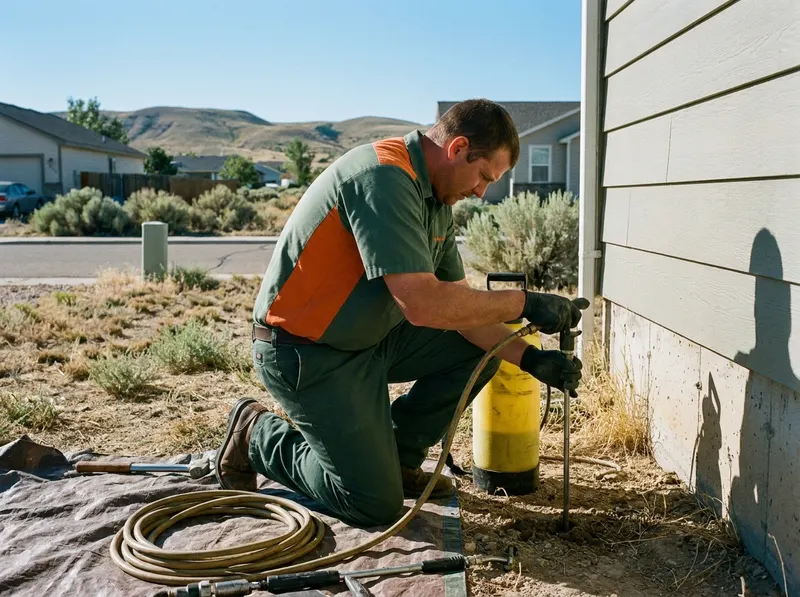
Subterranean termites in Sweetwater County remain active beneath structural footings throughout sub-zero winters by nesting deep below the frost line, which extends 42 to 48 inches into high-desert soil. In properties throughout College Hill, Blairtown, and the Yellowstone Road Corridor, subterranean colonies follow deep plumbing penetrations through foundation slabs or build protective mud tubes up masonry stem walls. Standard topical perimeter sprays applied to surface soil fail against these colonies because winter freezes neutralize surface-applied formulas and termites bypass surface soil entirely via subterranean cracks. High-desert termite management requires hydraulic injection of non-repellent liquid termiticides directly into perimeter soil beds at depths of 12 inches alongside footings, forming a lethal transfer barrier that foraging workers bring back to eliminate the subterranean queen.
Older construction near Downtown Rock Springs and the Bunning Park Area frequently features rubble stone footings or aging timber floor joists set close to grade. If crawlspace moisture levels rise above 18 percent due to improper seasonal ventilation or snowmelt accumulation, subterranean termites exploit the softened sill plates. Liquid non-repellent treatments provide long-term defense along building perimeters, whereas direct borate salt penetration treatments fit exposed joists and studs already showing exploratory mud galleries. The operational trade-off centers on structural invasiveness versus treatment speed: liquid barriers necessitate drilling slab perimeters every 12 inches through attached concrete patios or driveways, while bait monitoring stations require zero drilling but rely on several months of active colony feeding to achieve complete elimination.
Properties in outlying zones such as Reliance Road, Clearview Acres, and the Sunbeam Addition face unique exposure where untreated landscape ties, stacked sagebrush firewood, and outbuildings act as satellite termite nodes. Outbuilding treatments differ from primary residential applications: detached pole barns or storage garages on floating concrete slabs require isolated perimeter trenching, while finished residences demand comprehensive crawlspace ground shields and interior stem-wall rod applications. Every operational plan requires a physical site measurement to calculate exact linear footage, depth to bedrock, and subfloor clearance before definitive intervention begins.
Every job gets a firm, written price after a free on-site visit.
Tell us about your termite control job in Rock Springs and we'll send a clear, written quote, usually the same day.
 Drevixa Pest Control